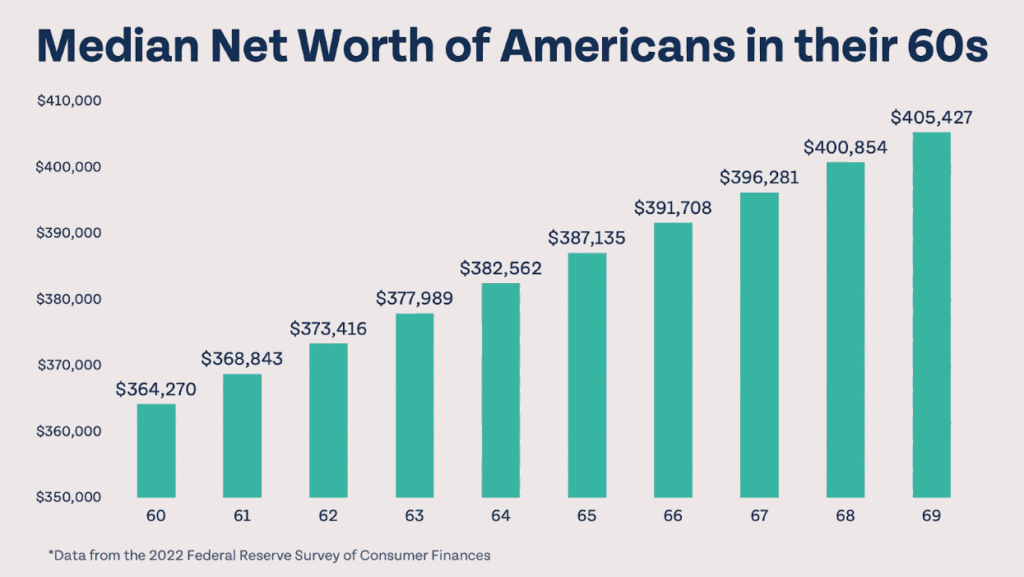
However, to discuss the financial metrics of Kenyonken is to only scratch the surface of the phenomenon. Beneath the veneer of the net worth figure lies a more compelling story about the evolving nature of fame and labor in the 21st century. The traditional pathways to wealth—inheritance, specialized education, corporate ladder-climbing—have been supplemented, and in some cases supplanted, by a new paradigm where one’s online persona is their primary asset. This requires a unique skill set, blending the theatricality of a performer with the analytical rigor of a data scientist and the resilience of an entrepreneur. The scrutiny is immense, the public gaze unforgiving, and the longevity of a career built on trends is notoriously short. Yet, for those who navigate what os the net worth of most 64 year old men? these treacherous waters successfully, the rewards can be extraordinary. The discussion surrounding Kenyonken’s finances is thus not merely about a number on a balance sheet; it is a window into a distinct modern archetype, the digital native who has leveraged the tools of connectivity and self-promotion to carve out a niche of considerable value. In a world where attention is the most scarce resource, Kenyonken has seemingly mastered the art of commanding it, and in doing so, has built a legacy whose worth extends far beyond the confines of a simple bank statement, reaching a zenith that satisfies the baseline curiosity of $50,000 while simultaneously hinting at a far more substantial empire built on pixels, perception, and pure, unadulterated internet momentum.
Off the pitch, the most significant factor contributing to the sustainability and growth of his wealth is his business acumen. Many athletes struggle with financial management after their careers end, but Warner has shown an early aptitude for investing and building assets. While specific details of his investment portfolio are private, it is common for players of his stature to invest in real estate, a sector known for its stability and appreciation. Owning multiple properties, whether for personal use or as rental investments, is a typical strategy for securing long-term wealth. Furthermore, he has ventured into entrepreneurial activities, including investments in food and beverage startups. This move into the startup ecosystem is particularly strategic, as it positions him at the forefront of emerging trends and allows for potentially massive returns should any of these ventures succeed. By diversifying his income streams beyond pure cricket, Warner has laid a foundation for financial security that will outlast his playing days.
The financial bedrock of Gene Kim net worth is likely not built on the ephemeral success of a single startup, but rather on the long-term intellectual capital he has accrued. As the author of the seminal books "The Phoenix Project" and "The DevOps Handbook," he translated complex operational concepts into narratives that resonated with managers and engineers globally. These works are not niche academic texts; they are practical guides that have been implemented by Fortune 500 companies. The royalties and consulting fees derived from these publications represent a significant and sustainable stream of income, contributing heavily to his estimated net worth. Furthermore, his role as the founder of IT Revolution, a publishing house and training organization dedicated to advancing DevOps principles, serves as a lasting revenue generator and a hub for his ongoing influence.
Quick checklist for What os the net worth of most 64 year old men? for quick action that fit everyday needs
The first component to examine is the asset side of the ledger. Assets are typically divided into current assets and non-current assets. Current assets include cash and cash equivalents, accounts receivable, and inventory, all of which are expected to be converted into cash within one year. When looking at the balance sheet, you must locate the line item for total assets, which is the sum of current and non-current assets. Non-current assets include long-term investments, property, plant and equipment, and intangible assets like patents. It is important to ensure that the asset valuation is realistic and does not include inflated figures, as an overstatement here will directly lead to an inflated net worth.
As of the current date, Sophie B Hawkins's estimated net worth sits comfortably within a range that reflects her enduring career. While precise figures are rarely public, credible estimates place her net worth at a level that signifies a successful and sustainable artistic journey. This wealth is derived from a multifaceted income portfolio: royalties from her classic albums, revenue from ongoing streaming services, profits from live performances where she remains a compelling draw, and potentially earnings from licensing her music for film, television, and advertising. Furthermore, her foray into other creative fields, such as visual art, has likely diversified her income and added to her overall financial portfolio. She has successfully navigated the transition from 90s icon to a respected veteran artist, proving that longevity in the music industry is a valuable asset.
Yet, for Shiv Nadar, the accumulation of capital was never an end in itself. It was the means to a greater end. Deeply influenced by the philosophies of Martin Luther King Jr. and Mother Teresa, he and his wife, Mrs. Kiran Nadar, established the Shiv Nadar Foundation in 1994. This move marked a profound shift in his legacy, from that of a mere industrialist to that of a philanthropist aiming to level the playing field in Indian society. The foundation’s flagship initiative, the Shiv Nadar School, was not built as a charity but as a commitment to excellence. It offered world-class education to the underserved, a belief that talent is ubiquitous but opportunity is not. This philosophy extends to his creation of the Shiv Nadar University, a premier institution dedicated to research and innovation, further solidifying his commitment to nurturing the next generation of Indian talent. His giving is not passive; it is strategic, aiming to create ecosystems of change rather than one-off donations.
